
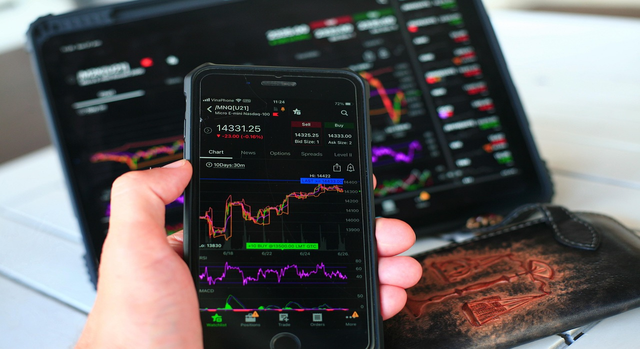
Understanding the complexities of financial markets can be a daunting task. Market conditions, especially when categorized as trending or ranging, play a crucial role in shaping your investment strategies. Knowing the difference between these two states can significantly enhance your decision-making process and potentially improve your financial outcomes. In this article, we’ll explore the nuances of market conditions: trending vs ranging and what to do, providing you with a robust framework to navigate these dynamic financial landscapes effectively.
Section 1: Understanding Trending Markets
Trending markets are characterized by consistent movement in one direction over a period of time. This directional shift can be upward, signaling a bullish trend, or downward, indicating a bearish trend. Identifying a trending market is essential for traders and investors as it helps in aligning strategies with the market’s momentum.
Traders often rely on technical indicators like moving averages, trend lines, and the relative strength index (RSI) to confirm a trend. These tools help in identifying the strength and sustainability of a trend, allowing investors to make informed decisions. In a trending market, the primary goal is to capitalize on the momentum. Buying during an uptrend and selling in a downtrend are fundamental strategies that can be employed.
However, trending markets also come with their own set of challenges. Over-reliance on trends without considering potential reversals can lead to significant losses. Therefore, it is crucial to set stop-loss orders and continuously monitor market conditions to mitigate risks.
Section 2: Recognizing Ranging Markets
Ranging markets, on the other hand, exhibit price fluctuations within a defined range over time. Unlike trending markets, the price moves sideways, oscillating between support and resistance levels. Understanding ranging markets is essential for traders who prefer short-term gains and less volatility.
In a ranging market, the strategy shifts from following momentum to trading within the established range. This involves buying at support levels and selling at resistance levels. Using indicators like Bollinger Bands and stochastic oscillators can be particularly useful in identifying range boundaries and potential breakout points.
Sub-section: FAQs About Ranging Markets
- What are the best strategies for trading in ranging markets? In ranging markets, traders often use range-bound strategies such as buying at the bottom of the range and selling at the top. Oscillators and Bollinger Bands can help identify these levels.
- How do I identify when a ranging market is about to break out? Watch for increased volume and volatility near the range boundaries. A breakout often follows these signals, indicating a potential new trend.
- What are common mistakes to avoid in ranging markets? A common mistake is assuming a range will last indefinitely. Always be prepared for a breakout by setting stop-loss orders to protect against unexpected movements.
Section 3: Implementing Strategies for Different Market Conditions
Adapting your strategies to the current market conditions is crucial for success in trading and investing. In trending markets, focus on momentum-based strategies. Utilize moving averages and trend-following indicators to guide your entry and exit points. Meanwhile, in ranging markets, adopt strategies that capitalize on the predictability of the range. Use support and resistance levels to make informed buy and sell decisions.
It is also essential to remain flexible and responsive to changing market conditions. Transitioning from a trending to a ranging market, or vice versa, requires a shift in strategy and mindset. Having a well-defined plan and being disciplined in its execution can make the difference between profit and loss.
Moreover, diversification across different asset classes can help manage risk and enhance returns. By not solely relying on one type of market condition, you can smooth out potential volatility and reduce the impact of adverse market movements.
Section 4: Practical Tips and Common Pitfalls
To navigate market conditions: trending vs ranging and what to do, it's vital to consider practical tips and recognize common pitfalls. Here are some key strategies and mistakes to look out for:
- Stay Informed: Keep abreast of economic news and events that might influence market conditions. Being informed allows you to anticipate changes and adjust your strategies accordingly.
- Use Technical Analysis: Leverage technical indicators to confirm trends and identify range boundaries. This can provide a more structured approach to trading and reduce emotional decision-making.
- Set Realistic Goals: Define clear objectives for each trade or investment. Setting realistic goals helps maintain focus and discipline, preventing impulsive decisions.
- Avoid Overtrading: Overtrading can lead to increased transaction costs and potential losses. Stick to your strategy and avoid the temptation to chase after every price movement.
Sub-section: FAQs on Practical Tips
- How can I stay updated with market trends? Subscribe to financial news platforms, attend webinars, and participate in trading forums to stay informed about market trends and insights.
- What technical indicators are most reliable for trend confirmation? Moving averages, MACD, and RSI are commonly used indicators for confirming trends and gauging market momentum.
- Why is it important to set stop-loss orders? Stop-loss orders protect your investment by automatically selling a position when it reaches a predetermined level, thus limiting potential losses.
- How do emotions impact trading decisions? Emotional trading can lead to irrational decisions and increased risk. Maintaining a disciplined approach and following a well-defined plan can mitigate emotional influences.
In conclusion, understanding market conditions: trending vs ranging and what to do is critical for successful trading and investing. By recognizing the characteristics of each market type and adapting your strategies accordingly, you can enhance your financial decision-making and improve your chances of achieving favorable outcomes. Stay informed, use technical analysis, and continuously refine your approach to navigate these ever-changing market landscapes effectively.